

Our Wagyu Selection
We are proud to offer a variety of imported Wagyu beef. You can see the marbling in Wagyu that you just do not see in other types of steaks. Wagyu is tender, decadent, and packed with luxurious flavor.
The unique taste and tenderness of highly marbled Wagyu beef makes for an unrivaled eating experience. That is why Wagyu beef is finding its way into the repertoires of gourmet cooks and fine restaurants across the U.S.
Japanese Wagyu
From Japan(typically from Miyazaki prefecture, but other prefectures just as Kagoshima, Hokkaido, Kagawa and more are available:
- A5 Ribeye
- A5 NY Strip
- A5 Olive NY Strip from Kagawa, subject to availability
Olive Wagyu is brought in only a few times per year, usually around 2-3 times annually.
Australian Wagyu
The following cuts are crossbred or hybrid Wagyu from Rangers Valley and Stanbroke. Most are available in Marbling Score 7 or higher unless otherwise noted.
- Australian Wagyu boneless ribeye
- Australian Wagyu bone-in ribeye, subject to availability
- Australian Wagyu tomahawk MS5
- Australian Wagyu NY Strip MS9
- Australian Wagyu tenderloin MS3, MS7, or MS9
- Australian Wagyu picanha
- Australian Wagyu tri tip MS5
- Australian Wagyu bavette MS9
- Australian Wagyu top sirloin MS9
- Australian Wagyu hanger steak, NR
Purebred Australian Wagyu
J. Morten’s also offers Purebred Australian Wagyu from 2GR in limited quantities.
Many of the hybrid and crossbred cuts listed above are also available in Purebred, or 94% Wagyu, on a limited basis.
Also Available
- Australian Wagyu 8 oz. burger patties, 2 per pack
- Australian Wagyu all-beef hot dogs, 4 per pack
Please call or stop into the shop for the current Wagyu selection.
Looking for more premium cuts? Explore our full specialty meat selection or view the J. Morten’s product list.
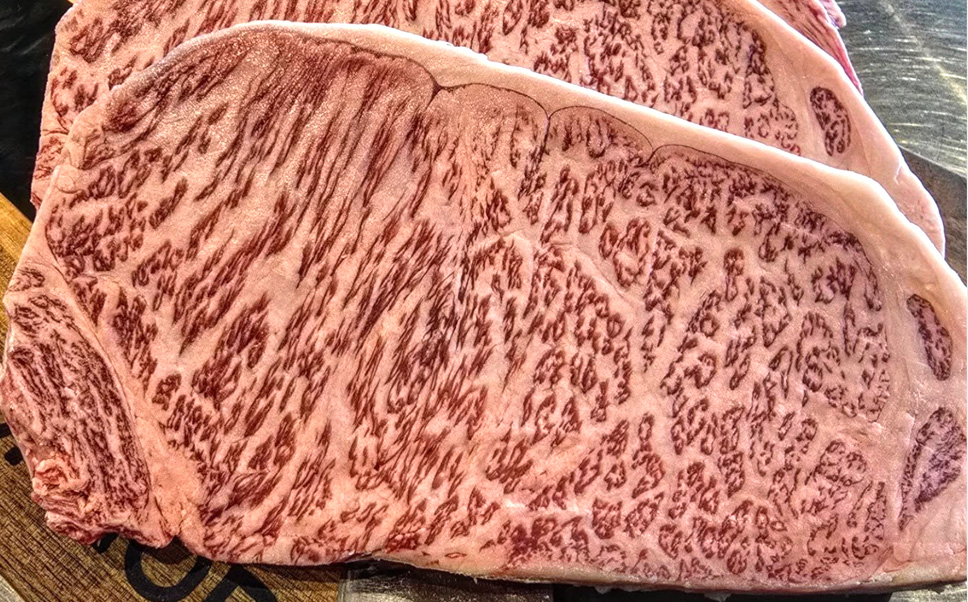
A Specialty Meat Shop for Wagyu in the Twin Cities
J. Morten’s is a local specialty meat market in St. Louis Park serving customers from Minneapolis, Edina, Minnetonka, Golden Valley, and across the Twin Cities.
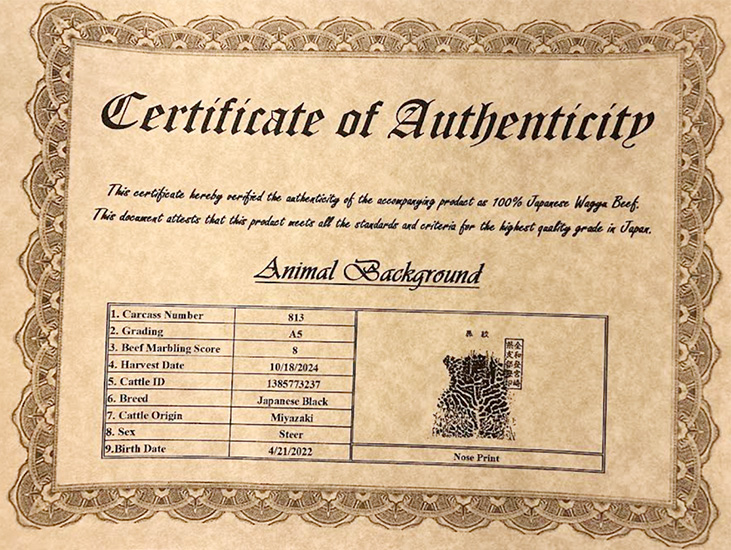
An official Japanese Wagyu Certificate of Authenticity verifying the lineage, carcass number, and authentic A5 quality grading.
What Is Wagyu?
Wagyu is a term that literally means “Japanese cow” and is the name given to cattle breeds developed over centuries in Japan. Wagyu beef is known for its intense marbling and carries a well-deserved reputation for exquisite taste, texture, and tenderness.
The world of cows in Japan can be traced by breed, bloodline, and even geography. Beginning in the Meiji Era, the Japanese recognized the value of Wagyu beef and sought to develop it into the highest quality beef in the world. To preserve the purity of the bloodline, Japan banned the export of Wagyu DNA in 1997.
The Four Main Japanese Wagyu Breeds
- Japanese Black, Kuroge Washu
- Japanese Brown, Akage Washu
- Japanese Shorthorn, Nihon Tankakushu
- Japanese Polled, Mukaku Washu
Why Kuroge Washu Matters
By far the most important of the four Wagyu breeds is Kuroge Washu, known for its unique genetic disposition for exquisite marbling.
Kuroge Washu is the only breed of cattle that can achieve an A4 or A5 rating by the Japanese Meat Grading Association.
A5 Japanese Wagyu Beef Grading
Japanese Wagyu beef is strictly graded by the Japanese Meat Grading Association. Because it is one of the most exquisite beef products in the world, proper grading helps protect integrity, transparency, and authenticity.
Wagyu beef carcasses are graded between
Yield Grade
Yield refers to the ratio of meat compared to the actual carcass weight.
Quality Grade
Grade refers to the overall Beef Marbling Score, Beef Color Standard, Beef Fat Standard, firmness, and texture.
What A5 Means
To qualify as A5 Japanese Wagyu, beef must be graded as Grade A for yield and Grade 5 in Beef Marbling Score, Beef Fat Standard, Beef Color Standard, firmness, and texture.
To be designated as A5 Wagyu, the beef must be raised in Japan and achieve the highest possible rating by the Japanese Meat Grading Association.
Japanese Wagyu vs. Australian Wagyu
Japanese Wagyu is the pinnacle of the steak world and A5-grade Wagyu is among the rarest of all steaks, representing less than 1% of total Japanese production.
Australian Wagyu differs from Japanese raised Wagyu in 2 ways. First, Japanese A5 is always going to be 100% Japanese Black, of Kuroge Washu, cattle, where as the Australian Wagyu we offer is either going to be a 50% Wagyu, 50% Angus hybrid, or Purebred, which has been bred up over at least 4 generations to a minimum of 94% Wagyu. Second, Japanese Wagyu will be raised in open air pens and on feed their entire lives, so these will be the most marbled, most tender cuts you can find. Australian Wagyu (and really most any Wagyu raised outside of Japan) will be raised in pasture for part of it’s life, and be put on a grain fed at a later date, from 300-500 days.
Purebred and Hybrid Australian Wagyu
Hybrid or Crossbred Australian Wagyu
Australian Wagyu grades slightly differently on the BMS, or Beef Marbling Scale. For Australian Wagyu, the scale goes up to 9. For a frame of reference USDA Prime averages about 3.5 on this scale, but can go as high as 5 on occasion.
J. Morten’s offers a variety of cuts from MS5 up to MS 9.
Objective carcass measurement using a digital camera is also used to further evaluate marbling and marbling fineness, meaning how the fat is distributed through the eye muscle.
Purebred Australian Wagyu
J. Morten’s is proud to offer Purebred Australian Wagyu from 2GR in limited quantities.
Purebred differs from the traditional hybrid or crossbred Australian Wagyu in that instead of being 50% Wagyu, it has been bred back up to a minimum of 94% Wagyu over 4 generations, giving this Wagyu F4 genetics. Most of these herds in Australia are now between 97-99% wagyu.
Marbling and the BMS Grading System
Marbling is the distribution of soft white intramuscular fat within the red meat. Generations of careful breeding and management of diet and exercise contribute to the unique marbling of Wagyu beef.
Japanese Wagyu is graded for marbling on a scale of up to 12, with 12 being the highest achievable quality. At this level, the beef is considered a work of art.
Australian Wagyu is graded on a scale going up to 9. We carry cuts between the grades of 5 and 9. Grades below 5 become too similar to USDA Prime.
Japanese Wagyu Marbling
The Japanese marbling scores go up to 12, with a minimum score of 8 being required for the beef to achieve a grade of A5. Other factors that go into determining the A5 grade include the color of the meat, the color of the fat, the overall distribution of the fat, the firmness of the meat and the yield of the animal. Beef must be graded among the top of all of those categories to achieve the A5 grade.
Australian Wagyu Marbling
The Australian Wagyu J. Morten’s imports is graded on a scale up to 9, with MS5 up to MS9 selections available depending on the cut and current inventory.
Kobe Beef Confusion
You have probably heard of Kobe beef, but thanks to mislabeling in the U.S., the term is often confusing. Since Kobe is not always used carefully in the American market, beef that is actually only a small percentage Wagyu is sometimes sold at a high premium and labeled as “American Kobe.”
Breed
Certified Kobe beef must come from Japanese Black cattle, also known as Kuroge Washu, and must be pure Tajima.
Place
The cattle must be bred, raised, and slaughtered in the Hyogo prefecture of Japan.
Marbling
The meat must reach a 6 or above on the BMS marbling scale.
Wagyu Beef FAQs
Buying Wagyu can feel a little intimidating the first time. Here are some of the most common questions people ask about Japanese A5 Wagyu, Australian Wagyu, Kobe beef, marbling, cooking, and serving.
What is Wagyu beef?
Wagyu literally means “Japanese cow” and refers to specific Japanese cattle breeds known for exceptional marbling, tenderness, and rich flavor.
Today, Wagyu can refer to beef from Japan as well as Wagyu-influenced cattle raised in places like Australia and the United States. The eating experience can vary a lot depending on breed, genetics, marbling score, country of origin, and how the beef was raised.
What is A5 Wagyu?
A5 is the highest grade given to Japanese Wagyu beef. The “A” refers to yield, while the “5” refers to the highest quality grade for marbling, color, firmness, texture, and fat quality.
Japanese A5 Wagyu is extremely rich, heavily marbled, and usually best enjoyed in smaller portions rather than as a large steakhouse-style serving.
Is Wagyu the same as Kobe beef?
No. Kobe is a specific type of Wagyu, but not all Wagyu is Kobe.
Certified Kobe beef must come from Tajima-strain Japanese Black cattle raised in Japan’s Hyogo prefecture and must meet strict grading and certification standards. The term “Kobe” is often misused, so it is worth asking where the beef actually comes from.
Can I grill Wagyu?
It’s all about the fat. Or rather the amount of it. Higher fat items will flare up more. Cooking over an open flame may be your preferred or only option. My suggestion is that for fattier cuts, place your cast iron skillet or griddle on the grill and heat that up. You can still cook outside, and will not have to worry about the flare up at all.
What temperature should Wagyu be cooked to?
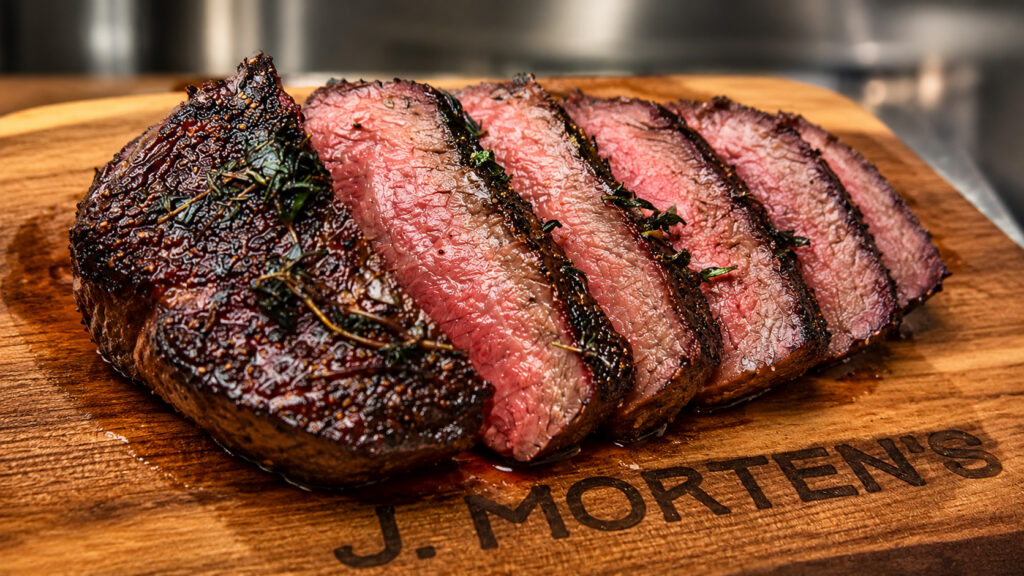
This all comes down to the marbling. And this goes for any red meat. The leanest cuts, like game meats, should ideally be served close to rare. As the cuts go up in marbling, so should your finished cooking temperature. I find that the most marbled cuts eat the best when they are closer to medium. Lean meats are cooked rare so they do not get tough and dried out. That is not a problem with highly marbled meats. In fact you want to cook them more to help break down the fats, which is what releases the juices and flavor. Plus the fat is so melt in your mouth, it’s nice to get a little more firmness out of the meat.
How much Wagyu should I serve per person?
This again all comes down to the amount of marbling in the beef. For the most marbled cuts, typical portion sizes would be anywhere from half, to a quarter or less than you would eat of a more typical steak. Leaner cuts of wagyu would lean towards a more typical portion size for the individual.
Why is Wagyu so expensive?
While wagyu can demand a very high price per pound, there is a wide range of pricing based on demand of the cut, and the grading. The two main factors in pricing are like anything else, scarcity and input costs. Wagyu are raised for a much longer time, and on feed for a much longer time that typical US beef. Feeding a large animal like these anywhere from 300 to almost 1000 days is a lot more costly, and a lot higher turn around time than the few short months grain fed beef is on feed here in the US>
What Wagyu cut should I buy first?
If you want the full Japanese A5 experience, ribeye or strip are classic choices. They show off the marbling and richness clearly.
If you want something that feels more like a familiar steak dinner, Australian Wagyu ribeye, strip, tenderloin, picanha, bavette, or tri tip can be a great place to start. Ask at the counter and the team can help match the cut to the meal.
Want a More Classic Steakhouse Cut?
Wagyu is rich, heavily marbled, and best for a special occasion or shared tasting-style meal. If you want a more familiar full-steak dinner, USDA Prime beef may be the better fit.
J. Morten’s carries Prime ribeyes standing rib roasts, dino ribs, and other premium beef cuts for grilling, roasting, smoking, and classic steak dinners.
Explore USDA Prime SteaksAsk What’s Available Today
Because many Wagyu cuts are limited, seasonal, or brought in only a few times per year, the best way to know what is currently available is to stop into J. Morten’s or call the shop.
The team can help you choose the right cut for the meal, the budget, and the occasion, whether you are planning a special dinner, grilling for guests, or trying Japanese A5 Wagyu for the first time.
View Our Full Selection View Product ListYou can also learn more about why J. Morten’s uses vacuum packaged meat to help protect quality and freshness.